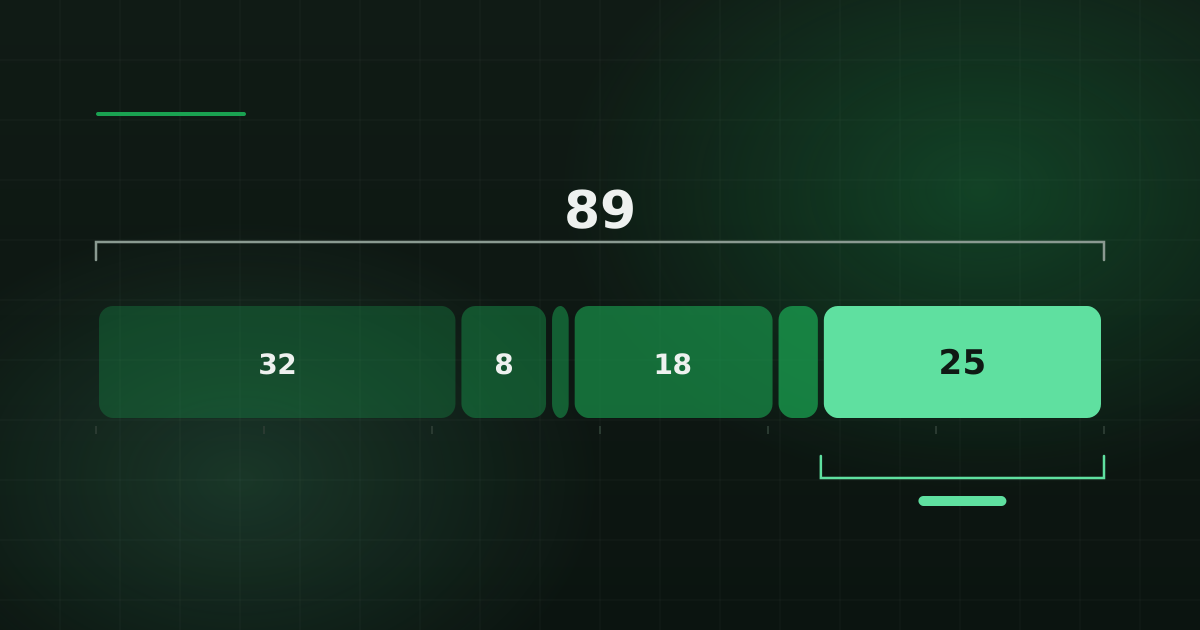
A merchant buys an item for 32 DT, sells it for 89 DT, and works out a margin of 57 DT. Three months later the till is empty while sales are climbing. The problem is not the advertising, the courier or the product. It is the formula.
In short: with cash on delivery, real margin is calculated per delivered order rather than per order received, and it includes two costs the classic formula ignores: advertising spread over successful deliveries, and the cost of refused parcels. In the example below, the margin falls from a claimed 57 DT to a real 25 DT.
The formula you are missing
Here are the two calculations side by side, on the same product.
| What most people calculate | What you should calculate |
|---|---|
| Selling price | Selling price |
| minus cost of goods | minus cost of goods |
| minus delivery paid to the courier | |
| minus packaging | |
| minus advertising per delivered order | |
| minus cost of returned parcels per delivered order | |
| = 57 DT (wrong) | = 25 DT (real) |
The two lines that change everything are the last two. They share one property: you pay them on the orders you receive, and you only recover them on the ones you deliver.
The worked example, line by line
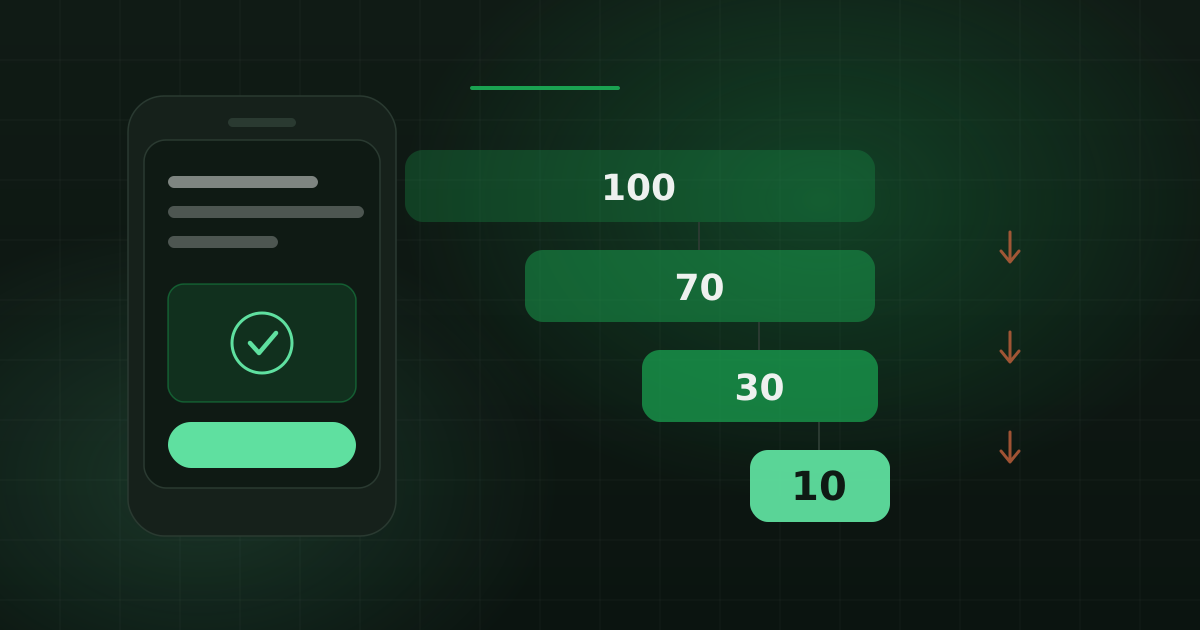
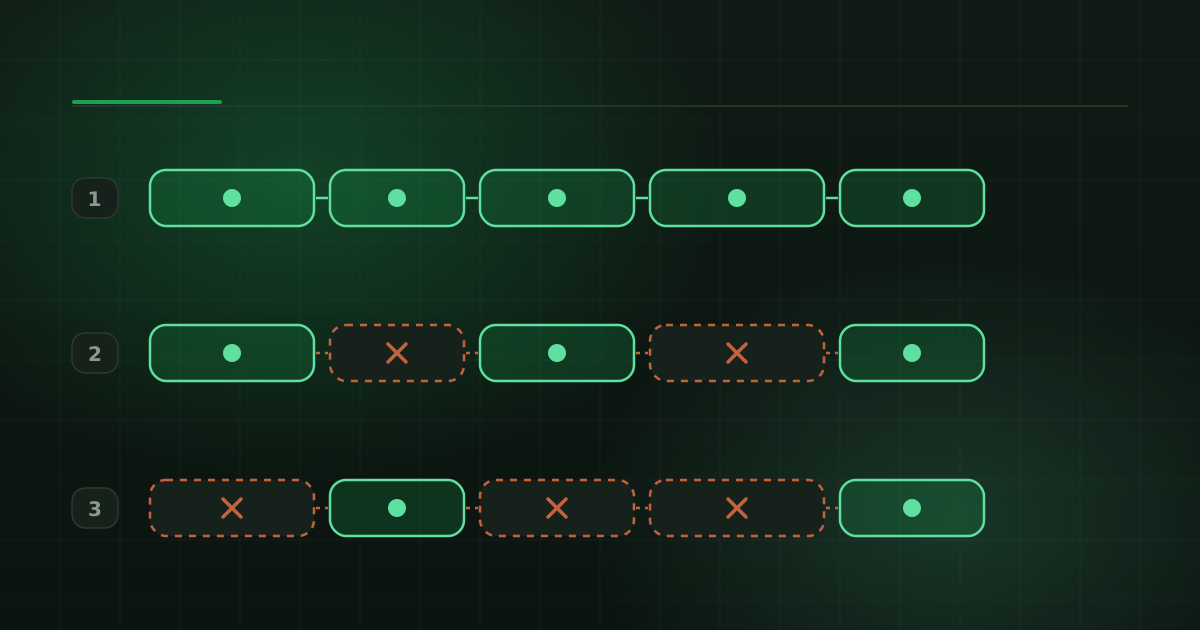
Take a real month. You ship 100 confirmed orders. 75 are delivered and paid for, 25 are refused at the door. Your advertising budget for the month is 1,350 DT.
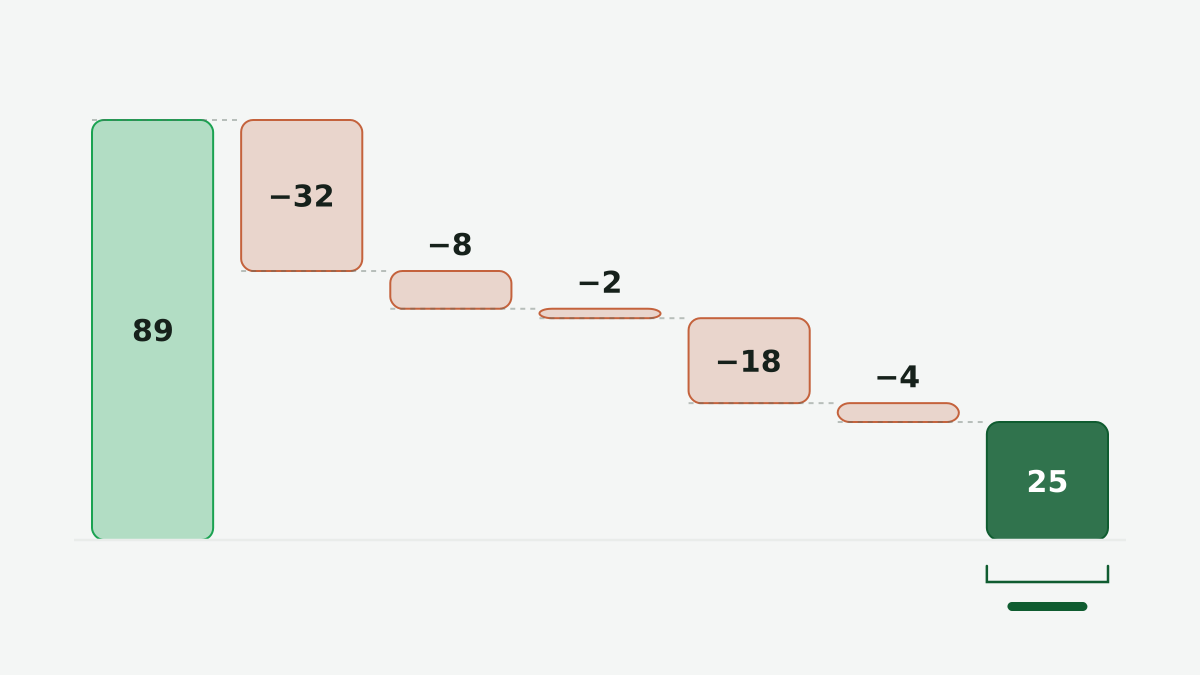
Selling price: 89 DT, delivery included.
Cost of goods: 32 DT. What you paid the wholesaler, inbound transport included.
Delivery: 8 DT. What you pay the courier to bring the parcel to the customer.
Packaging: 2 DT. Box, wrap, label, tape. A line everyone forgets, and one that costs more than expected once you pack properly.
Advertising: 18 DT. Here is the calculation that changes everything. 1,350 DT across 100 confirmed orders is 13.5 DT per confirmed order. But only 75 are delivered. Real advertising cost per delivered order is therefore 13.5 divided by 0.75, which is 18 DT. The 25 refused orders consumed advertising and returned nothing.
Returned parcels: 4 DT. A refused parcel costs you the outbound and the return leg, roughly 12 DT. You have 25 refusals for 75 deliveries. Each delivered order therefore carries 12 times 25, divided by 75, which is 4 DT of return cost.
Total costs: 64 DT. Net margin: 25 DT, or 28% of the selling price. That is a good product. But it is not 57 DT.
The return-cost rule
This formula is worth memorising, because it explains why two merchants with the same product at the same price can have completely different profitability.
Return cost per delivered order = parcel round-trip cost, times the refusal rate, divided by the share of orders delivered.
Here is what happens as the refusal rate climbs, with a 12 DT round trip:
| Refusal rate | Return cost per delivery | Advertising per delivery | Net margin |
|---|---|---|---|
| 10% | 1.3 DT | 15.0 DT | 30.7 DT |
| 20% | 3.0 DT | 16.9 DT | 27.1 DT |
| 25% | 4.0 DT | 18.0 DT | 25.0 DT |
| 35% | 6.5 DT | 20.8 DT | 19.8 DT |
| 45% | 9.8 DT | 24.5 DT | 12.6 DT |
The cost does not rise in a straight line, it accelerates, because refused orders are spread over a delivery count that is shrinking at the same time. Going from 25% to 45% refusals does not double your return cost, it more than doubles it, and advertising per delivery climbs alongside.
That is why the confirmation call is the most profitable action of your day. We cover the filters and the tooling in the article on the three features that actually matter.
Setting the price: three anchors, only one that works
The wholesaler anchor. Multiplying the purchase price by two or three is the most widespread habit, and it bears no relation to your real costs. In our example, 32 times two gives 64 DT, a loss of 3 DT per delivered order. A multiplier knows nothing about your refusal rate.
The competitor anchor. Useful for learning what the market accepts, dangerous as your only reference. Your competitor may have a better purchase price, a lower refusal rate, or may be losing money without realising it.
The customer anchor. The only one that truly counts. The question is not “what is this product worth” but “how much will my customer hand over in cash, at their door, without having seen the product”. In Tunisia that psychological limit sits, for most categories, between 40 and 150 DT, with clear steps at 49, 79, 99 and 149 DT.
The method that works: start from the full cost per delivered order, add the margin you are targeting, then round up to the nearest psychological step. In our example, 64 DT of cost plus 25 DT of margin gives 89 DT, which is exactly one of those steps.
Free or paid delivery?
Free delivery converts better, provided it is built into the price. What makes someone abandon a basket is not the total, it is the surprise: a price shown as 81 DT on the product page, then 8 DT added on the last screen. Research on cart abandonment puts unexpected costs at the top of the fixable reasons for abandoning.
Two simple rules:
- If you advertise free delivery, the product price must already absorb it. Our 89 DT example does.
- If you charge for delivery, show the amount on the product page, not at checkout.
Carrier rates and payout timings are covered in our guide to cash on delivery in Tunisia (in French).
When the margin is too thin
In order of effectiveness, which is not the order people usually try:
- Raise the price. Going from 89 to 99 DT adds 10 DT of net margin per delivered order, which is 40% more profit. Even if volume drops 10%, you still earn more.
- Improve the confirmation rate. Confirming within the hour rather than the next day lowers the refusal rate, which cuts return cost and advertising cost per delivery at the same time. One lever, two effects.
- Negotiate courier rates. Past a certain monthly volume, rates become negotiable. A dinar saved per parcel is a dinar of net margin.
- Lower the cost of goods. Useful, but the slowest lever: it means changing supplier or buying in volume, which ties up cash.
What almost never works: cutting the advertising budget. It reduces the number of orders without improving margin per order. If a product is not profitable at 1,350 DT of advertising, it will not be profitable at 700 DT.
The table to fill in every month
Six lines, ten minutes, once a month. This is what separates a store that is steered from a store that hopes.
- Confirmed orders shipped
- Orders delivered and paid for
- Refusal rate (line 1 minus line 2, divided by line 1)
- Total advertising budget
- Advertising cost per delivered order (line 4 divided by line 2)
- Net margin per delivered order
If line 6 falls two months running while revenue climbs, you are selling more and earning less. That is the most important signal on your dashboard, and it is the one almost nobody looks at.
Going further
Product choice drives this whole calculation: our guide to what to sell online in Tunisia explains how to filter an idea before buying stock. And to understand why a customer confirms then refuses at the door, read how Tunisians buy online.