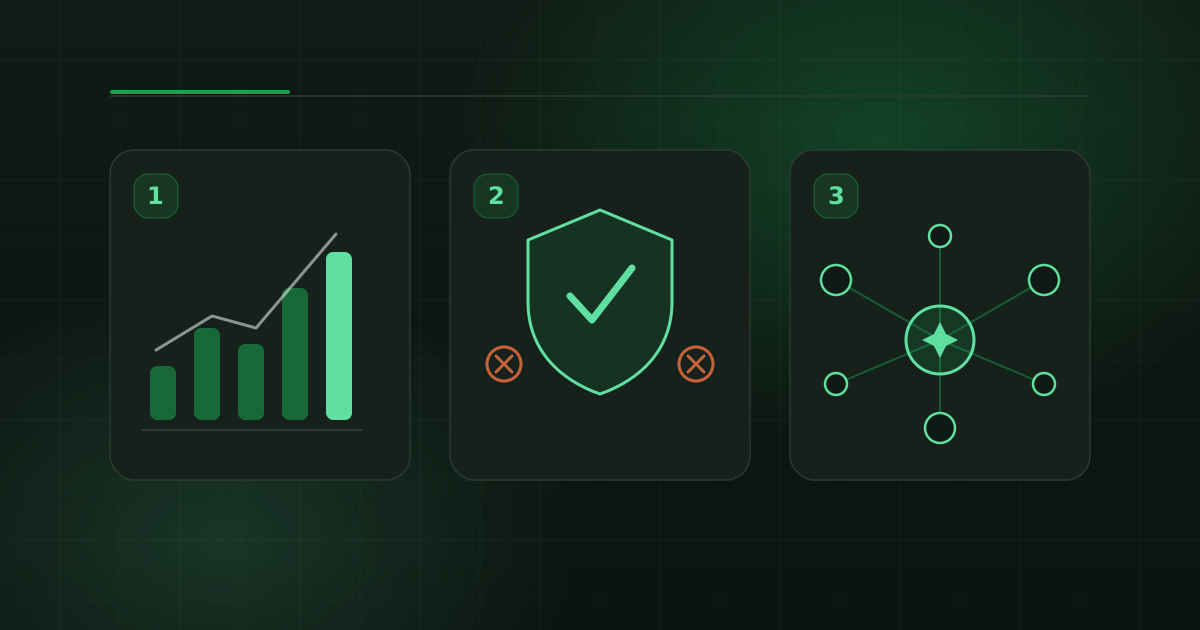
Every ecommerce platform shows the same page: thirty features, thirty icons, thirty promises. For a Tunisian merchant selling cash on delivery, only three of them decide whether the store makes or loses money. Here they are, with what each must actually do and how to verify it does.
In short: follow the order to delivery instead of to the click, filter fake orders before you pay for a parcel, and point AI at repetitive work rather than at your customer relationships. The rest of the feature list can wait until your hundredth order.
| The feature | What it must do | What it saves you |
|---|---|---|
| Delivery analytics | Tell placed, confirmed, delivered and returned orders apart | You finally know which product is profitable |
| Fake-order protection | Block invalid numbers and duplicates before shipping | 10 to 15 DT per parcel avoided |
| AI on repetitive tasks | Product pages, photos, standard replies | Several hours a week |
1. Analytics that answer a question
Most dashboards show visits, product views and revenue. All three are accurate and close to useless in Tunisia, because they stop at the click. With cash on delivery, the sale only exists when the courier collects the money.
A dashboard that helps a Tunisian merchant tracks four numbers:
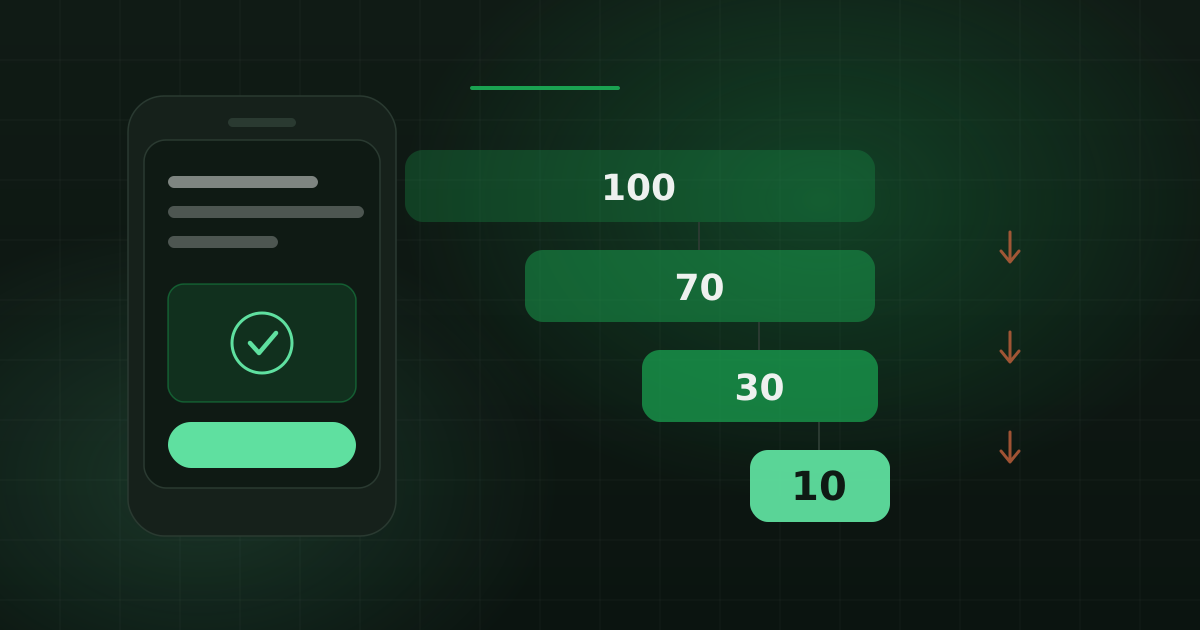
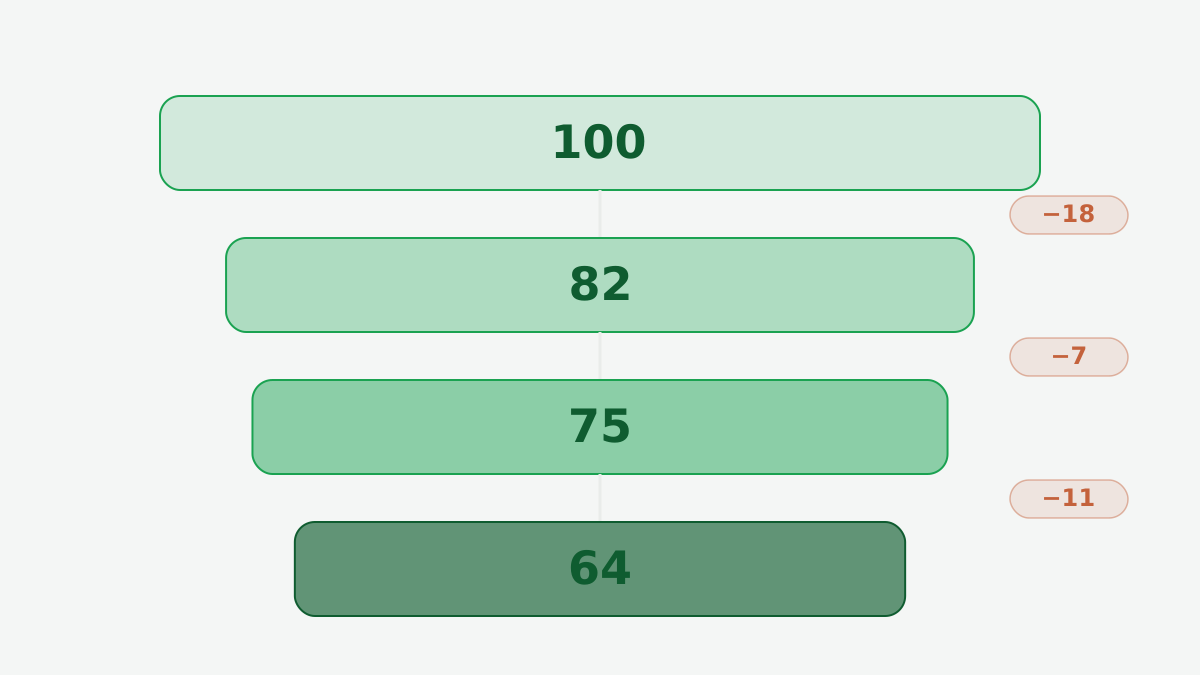
- Confirmation rate. Out of 100 orders received, how many customers confirm when you call or message them? Below 75%, the cause is almost always delay: you are confirming too late.
- Successful delivery rate. Out of 100 confirmed orders, how many are actually paid for? This is the number that decides your profitability.
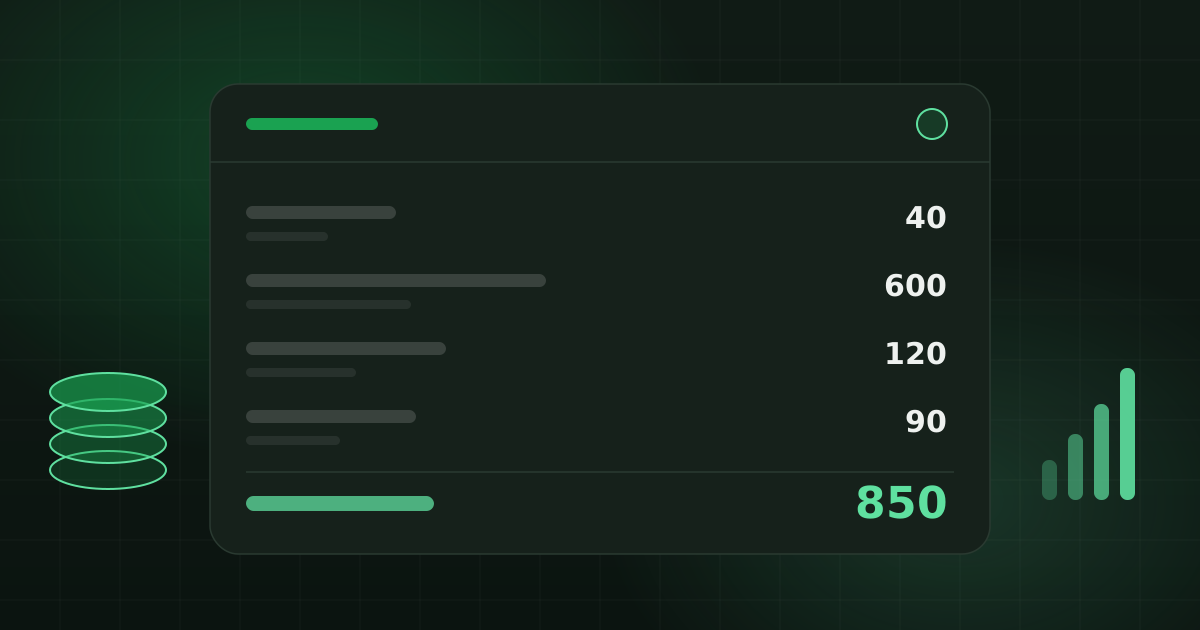
- Cost per delivered order. Not per order received. If you spend 300 DT on ads for 40 orders of which 26 are delivered, your real cost is 11.5 DT, not 7.5 DT.
- Margin per delivered order. Selling price, minus product, shipping, packaging, advertising and the cost of returned parcels. We work through that calculation in our guide to pricing and margin in Tunisia.
The test is simple. Place an order on your own store, then refuse it. If your reported revenue does not move, your analytics are lying, and every decision you build on them will be wrong.
2. Protection against fake orders
This is the subject nobody raises until they have lost money on it. Available estimates for Tunisia put refused parcels somewhere between 20% and 40% depending on the merchant and the category, with averages of 12% to 18% in fashion. Every refused parcel costs the round trip, often 10 to 15 DT, with no revenue against it.
Not all of these orders are fraud. Most come from real buyers who ordered on impulse, changed their mind, or never picked up the phone. The rest come from invented numbers, duplicate orders placed by mistake, and a small minority of deliberately malicious orders.
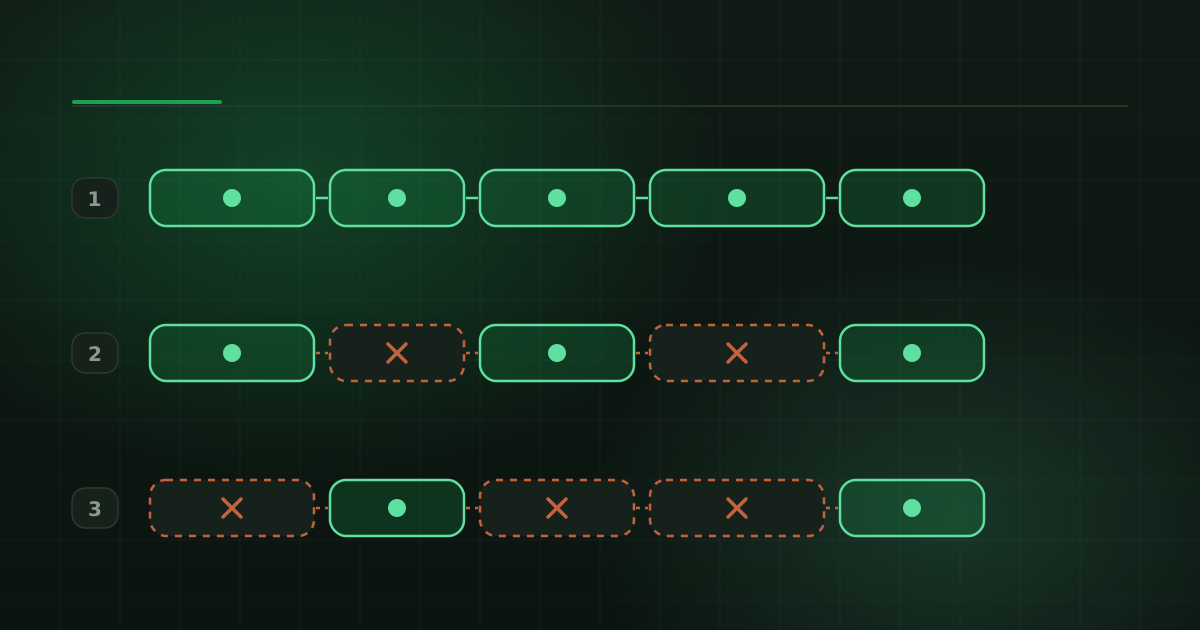
A working protection system acts at three moments:
- Before the order. Phone number format validated, a cap on orders per number per day, and blocking orders from countries you do not ship to.
- Right after the order. Duplicate detection (same number, same product, minutes apart) and a blocklist for customers who have already refused several parcels.
- Before shipping. A customer confirmation, by WhatsApp or phone, before the parcel leaves. This is by far the most effective measure. Sources that document the subject credit it with cutting return rates by roughly 30% to 40%.
No automatic filter replaces that confirmation. An algorithm can reject a nine-digit phone number; it cannot know the customer will not be home on Thursday. Be wary of a platform that sells its fraud tooling as a replacement for the confirmation call rather than as its complement.
3. AI, on repetitive work only
Artificial intelligence has become every platform’s default sales argument. It has real value for a small merchant, but over a narrower scope than the marketing suggests.
Where it saves time:
- Drafting a first version of a product description from three words, which you then correct. Adding 100 products goes from three weeks to a few evenings.
- Cutting out a photo taken on a phone and giving it a clean background, with no studio and no software.
- Preparing standard answers to the ten questions your customers ask on repeat over WhatsApp.
- Pulling the name, address and product out of an order received as a message and turning it into a structured order.
- Translating your product pages from French into Arabic without rewriting them by hand.
Where it costs you customers: a chatbot left alone on the front line. Tunisian customers write in dialect, mix Arabic and French, type “chnowa el prix” and expect a human answer. A bot that misses on that exact question does not save support time, it loses a sale. Let AI draft the reply and send it yourself.
The features you do not need yet
A long feature list is impressive, but every unused option is one more thing complicating your day. Before your hundredth delivered order, you can safely ignore:
- multi-currency, as long as you sell in Tunisia and collect in dinars;
- multi-vendor marketplace mode, which serves a different business than yours;
- points-based loyalty programmes, which assume repeat customers you do not have yet;
- a dedicated mobile app, which nobody downloads for a 40-product store;
- email cart abandonment, in a market where follow-up happens on WhatsApp.
What matters at this stage fits in one sentence: receive the order, confirm it quickly, ship it, get paid. We cover the rest of the journey in the complete guide to ecommerce in Tunisia.
Six questions to ask before you commit
Ask them of any platform, ours included, and insist on a demo using your data rather than a showcase store.
- Does the dashboard tell a delivered order apart from a returned one?
- Can I see my successful delivery rate per product, not only overall?
- What happens when the same number places three orders in ten minutes?
- Is the WhatsApp confirmation link pre-filled, or do I retype the address?
- Can I export my orders if I leave? In what format?
- How long between my support question and an answer, on a Saturday afternoon?
The first three questions are about features. The last three are about what happens when the features are not enough. Those are often the more revealing ones.
Where to start
If you do not have a store yet, start with analytics and confirmation: they are what will tell you what to fix. If you are already selling, open your dashboard and look for last month’s successful delivery rate. If it is not there, you have just found your priority.
To understand what makes a customer accept or refuse a parcel, read our analysis of how Tunisians actually buy online. And for the platform side of the decision, see what breaks when you run a Tunisian store on an international platform.