The fastest way to lose money in ecommerce is not a failed ad campaign. It is buying 2,000 DT of stock before selling a single unit. This article takes the question in the opposite order: first what actually sells in Tunisia, then how to verify it on a budget that cannot hurt you.
In short: a good product for the Tunisian market is understood from one photo, survives a round trip with the courier, leaves at least 25 DT of gross margin, and can be restocked within a week. Test five ideas at 150 DT each before stocking a single one.
What genuinely sells online in Tunisia
The categories below come up repeatedly among merchants who last. That is a starting point, not a guarantee.
| Category | Why it works | The trap to know |
|---|---|---|
| Clothing and accessories | Constant demand, impulse purchase | Sizes: with no exchange policy, returns explode |
| Cosmetics and skincare | Frequent repeat purchase, decent basket | Regulation on some products |
| Home and kitchen | Films well, explains itself in ten seconds | Bulk: a large item is expensive to ship |
| Baby and childcare | Customers who buy without hesitating | High quality and compliance expectations |
| Sports and outdoor | Seasonal but strong | Seasonal peaks tie up your cash |
| Phone accessories | Small, light, comfortable margin | Crowded field, you need a difference |
What these categories share is not the sector. It is a product profile: light, visual, understandable without instructions, and priced at a level a Tunisian will hand over in cash at their door, which in practice means roughly 40 to 150 DT for most baskets.
The categories that look like good ideas
Some categories attract merchants because the headline margin is beautiful. They are far harder than they look for a first store.
- Expensive electronics. A 400 DT phone or smartwatch attracts fake orders and buyers who back out in front of the courier. The cash amount is an obstacle in itself.
- Fragile items. Glass, ceramics, bottled perfume. Between shipping and round trips, breakage eats the margin.
- Multi-size clothing. Sellable, but only with a written exchange policy and a precise size guide. Otherwise you are funding round trips.
- Supplements and health products. A regulated market, risky claims, and difficult search visibility.
- Bulky goods. A 300 DT piece of furniture can be profitable, but not with a standard courier and not on a first store.
None of these are off limits. They simply demand experience and cash reserves you do not have in month one.
Five filters before you buy stock
Run each idea through these in order. Most fall before the third filter, which is exactly the point.
Filter 1: is it understood from one photo?
Look at your product the way a customer scrolling Instagram at 10pm would. If it takes a paragraph to explain what it does, it will not get through. Products that work show themselves: you see the problem, you see the solution, you see the price.
Filter 2: does it survive shipping?
The product will be handled several times, travel in a bag with other parcels, and sometimes come back. If it cannot take a round trip, every refusal costs you twice: the delivery and the goods.
Filter 3: does the margin hold after every cost?
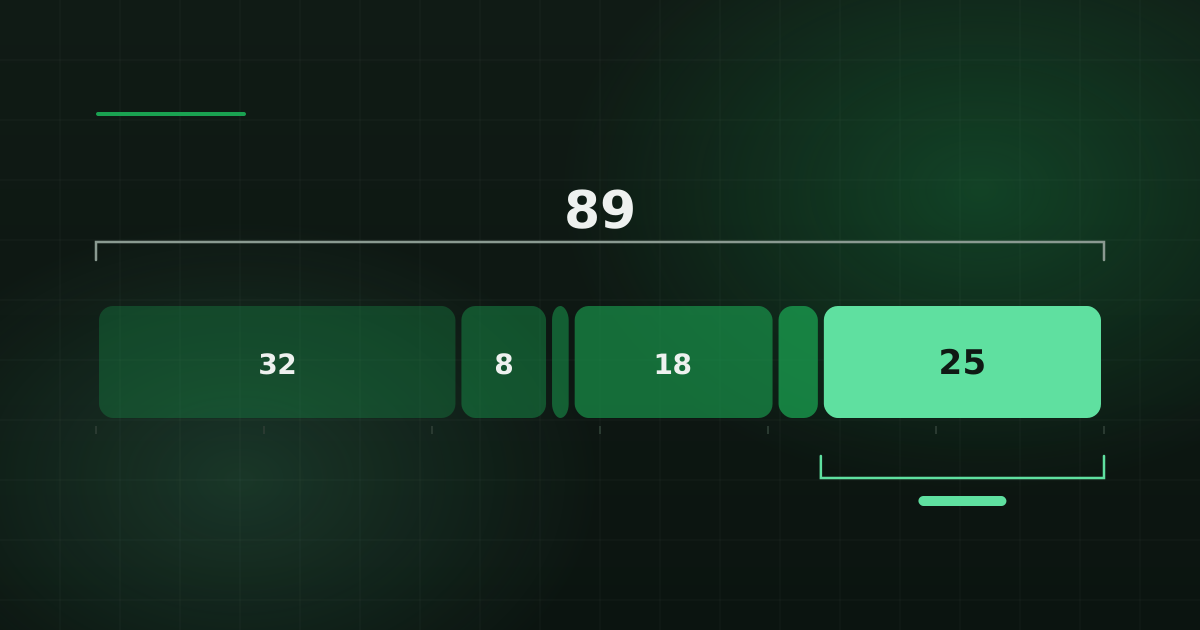
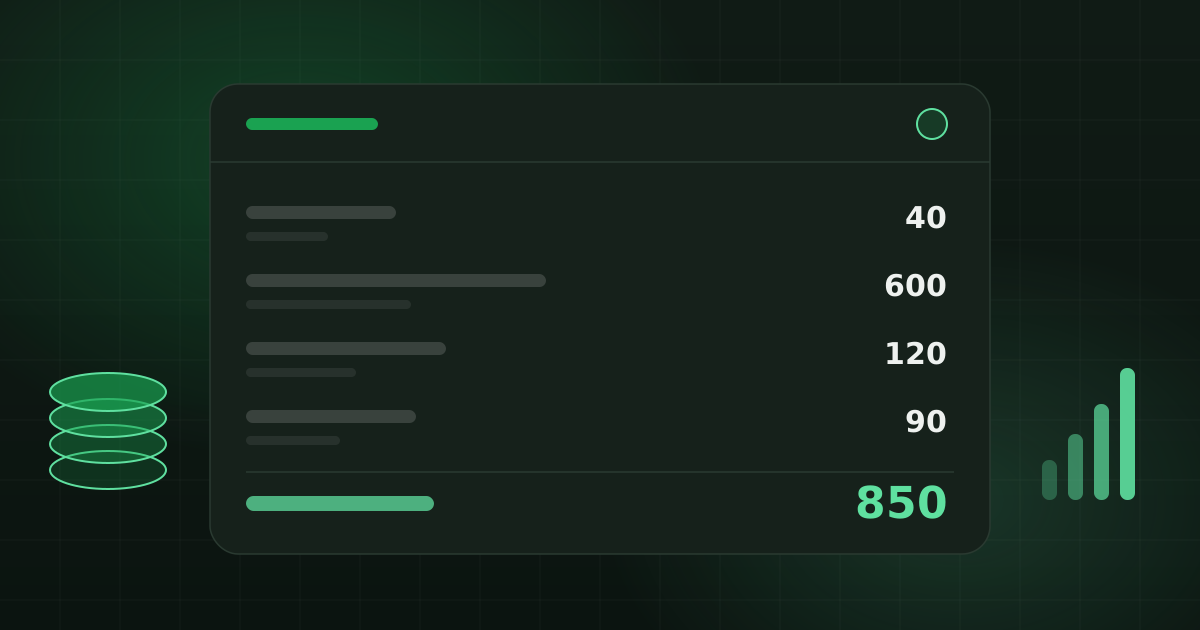
This is the filter that kills the most ideas. Take your selling price, subtract cost of goods, delivery, packaging, advertising and the average cost of returned parcels. If less than 25 DT remains, stop there. The full calculation, with a worked example, is in our guide to pricing and margin.
Filter 4: does demand already exist?
Do not guess, look. Three free sources:
- Google Trends, filtered to Tunisia, to see whether the term is rising or falling over twelve months.
- Meta’s Ad Library, which shows other sellers’ active ads. If three competitors have run the same ad for two months, it is paying for itself.
- Tunisian buy-and-sell Facebook groups, where you can see real prices and the questions buyers keep asking.
Existing competition is a good sign. A complete absence of competition usually means there is no market.
Filter 5: can you restock within a week?
A product that takes six weeks to come back forces you to tie up stock. At launch, prefer what you can rebuy from a local wholesaler in 48 hours, even at a thinner margin. Flexibility is worth more than a few dinars per unit.
Where to find suppliers
Three routes, in the order they matter at launch.
Local wholesalers. Central Tunis (Moncef Bey, Sidi Boumendil) and importers in Sfax cover most common categories. You buy small quantities, you pay more per unit, and you take no stock risk. That is exactly what validation needs.
Tunisian B2B Facebook groups. Less structured, but this is where importer contacts, end-of-line batches and real prices circulate. Always verify in person before a first significant order.
Local workshops and artisans. The slowest route and the most interesting over time: a product made in Tunisia that nobody else sells takes you out of the price war. Expect longer lead times and some development work.
Direct import from Asia comes later. It pays off at volumes you do not have in the first quarter, and it adds customs, lead times and cash advances to an already loaded equation.
Vetting a supplier in four questions
- Can I buy five units before I buy a hundred?
- What is the real restocking time, not the advertised one?
- What happens if a batch arrives defective?
- Does the price change if I order double?
A supplier who refuses the first question is not a partner for a launch.
Testing a product with 300 DT
Here is the protocol as it works in Tunisia.
- Buy two or three units from a wholesaler, not thirty. They will serve for photos and for fulfilling the first orders.
- Photograph them yourself. Neutral background, daylight, four angles, one shot that shows scale. Supplier catalogue photos are recognisable and do not convert.
- Publish the page on your store, with a firm price, delivery costs shown, and a visible WhatsApp number.
- Run 100 to 150 DT of advertising over five days, broad targeting, a single vertical video creative.
- Count confirmed orders, not clicks or messages. The decision threshold: ten confirmed orders in five days.
- Deliver those ten orders yourself if you can. You will learn more in ten deliveries than in three weeks of thinking.
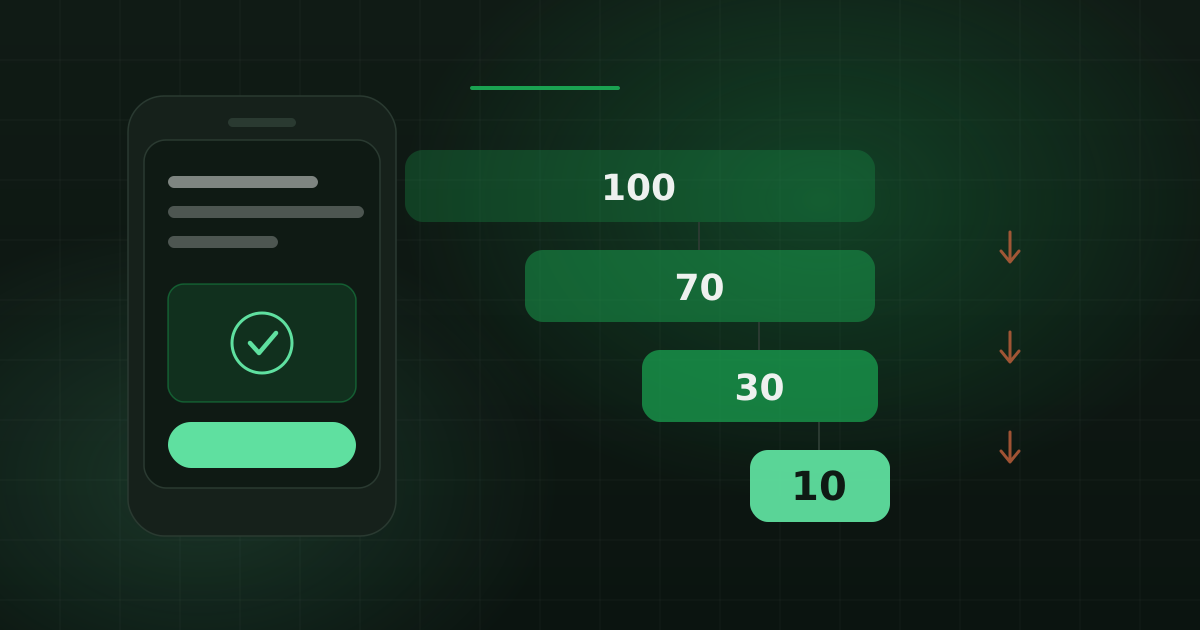
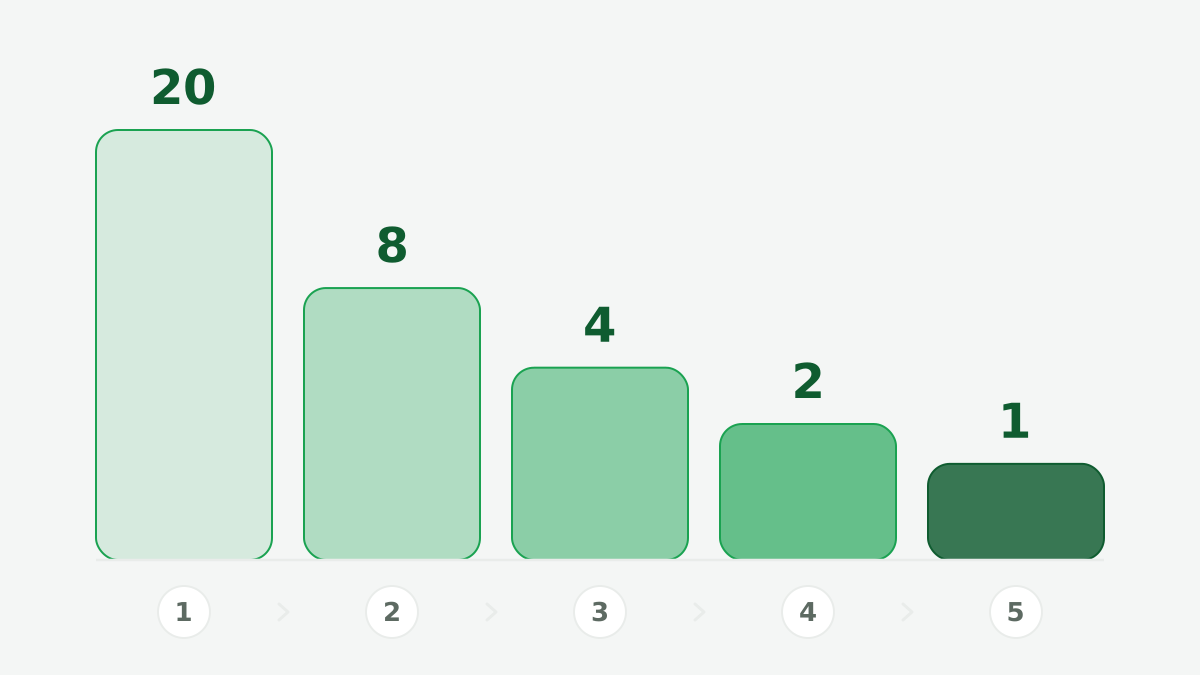
If you do not reach ten confirmed orders, do not buy more advertising for that product. Move to the next one. That is the point of the five-filter funnel: twenty ideas go in, one deserves stock.
The mistakes that come up most
- Buying stock before the first sale, because the wholesaler offered a volume price.
- Copying a competitor’s product without copying what makes it profitable for them: their photos, their price, their confirmation speed.
- Choosing a product you like rather than one that sells.
- Launching ten products at once, which makes it impossible to know which one works.
- Counting orders received instead of orders delivered, and believing in a success that does not exist.
What comes next
Once the product is validated, the work moves to the product page, the price and the confirmation. Our complete guide to ecommerce in Tunisia covers the whole journey, and the article on how Tunisians buy online explains what happens in the customer’s head between the ad and the cash handed to the courier.